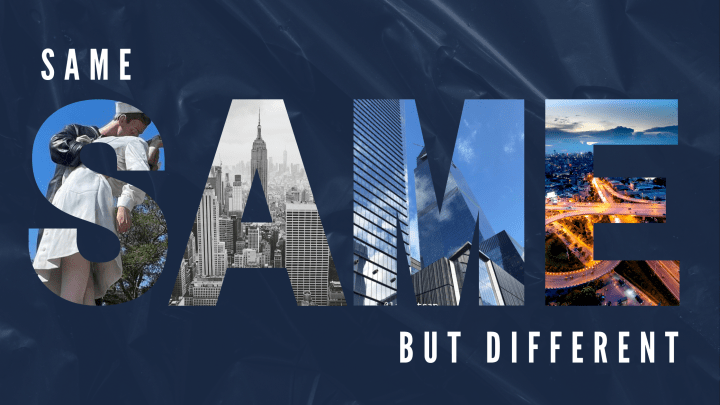
Imagining cities like New York City or New Orleans in the 90s, or even in the 50s, makes me a little envious of people who got to travel decades before everything started to blur together. Back then, cities felt more distinct, shaped by their geography, culture, and the people who lived there. Now, in many ways, it feels like the edges between them have softened.
I’ve referenced the world being flat before, in ways that social media and technology have removed barriers worldwide, providing access and communication to people far and wide. This has resulted in the phenomenon I can only describe as “same same, but different” when describing cities.
What the hell are you talking about, you ask? Well, let me tell ya.
What Sets Cities Apart
Cities, regions, what have you – they’re all a product of their environment. When you think of mountains, you probably imagine log cabins because of the abundance of timber nearby. When you think of Greece, you likely picture the iconic white buildings built to reflect the sun. When you think of New York City, the classic brownstones come to mind. And Paris, with its strategically placed patios, where they get to smoke and judge each and every person that passes by.
None of that is random. Architecture, infrastructure, and even the way cities grow are shaped by the resources available and the conditions people are trying to live in. For most of history, places looked different because they had to. You built with what you had and adapted to the climate around you.
The result was cities that felt deeply tied to where they were.
A Sense of Place
As places modernized, they started to look identical.
Listen, I love Texas, but large parts of Texas could realistically be anywhere else in the United States, and you probably wouldn’t notice the difference. Block after block of strip malls, massive parking lots, and copy-and-paste buildings create a landscape designed almost entirely around cars. The environment didn’t shape the city as much as the question: how can we make people need to drive everywhere?
And it’s not just Texas. Across the world, the same coffee shops, clothing stores, and fast-food chains have moved into the most culturally rich neighborhoods. Slowly but surely, they chip away at what once made those places unique.
I first noticed this in New Orleans, where you can stroll down the jazz-filled Bourbon Street, where drinks flow like water, only to turn around and discover a modern downtown district that could have been any other city.
Why It Matters
I think this is why places like Savannah, or honestly, most cities in Europe, have such an impact on visitors. They still have a sense of place. Their streets, buildings, and public spaces are deeply connected to their history and environment. The culture isn’t something added later; it’s built into the bones of the place itself.
When cities maintain that connection, they have a certain vibe that can’t be replicated. You’re not just somewhere new, you’re somewhere that could only exist there.
I feel that a lot of people are lacking the connection to their surroundings and their culture (based entirely on vibes), and I feel like a major part of it could be that it’s being stripped away from our very surroundings.
 Shut Up Madi